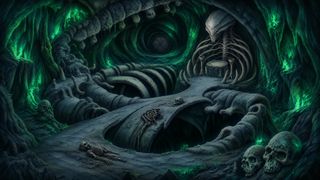
I · ROOM 770
The Dark One's Cave
Where the hero wakes. Repainted from a new design, with an iris door, a bone cage that erupts around a thief, and a backflip escape from real motion capture.
Built, in playtest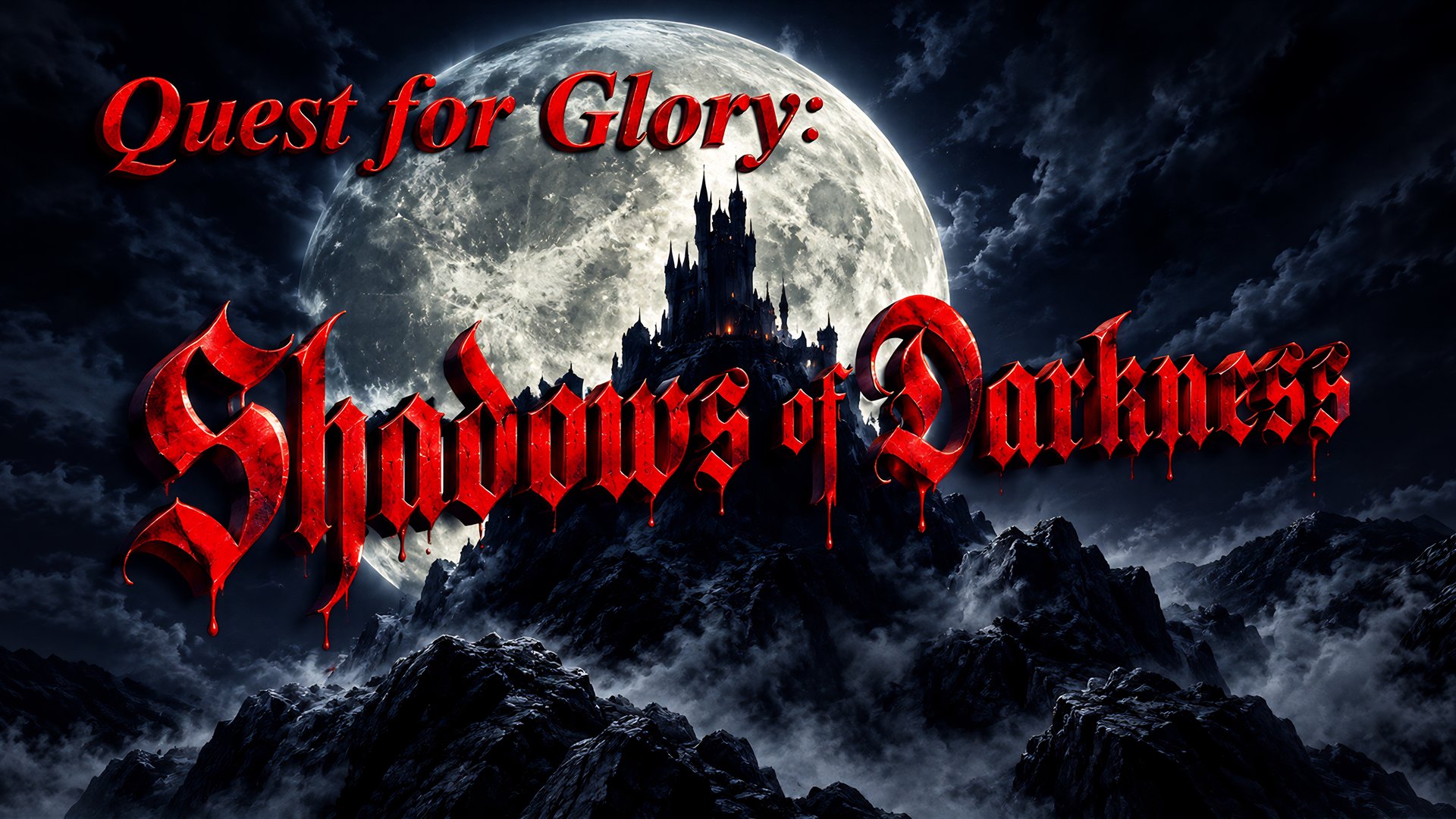
Return to Mordavia
A fan remake of Sierra's Quest for Glory IV: Shadows of Darkness, rebuilt from the ground up in Godot. Every room repainted, every voice restored or recreated, played in widescreen at 1920×1080.
 A tribute
Lori Ann and Corey Cole's fourth Quest for Glory took the series somewhere colder: a cursed valley of vampires, ghosts and Badders, told in that unmistakable narrator's voice.
This project began as a way to learn how games are made, starting with my own CD copy and one screen at a time. It became something bigger: a faithful remake that plays the way the original did, looks the way it does in memory, and fixes the rough edges Sierra never had time for.
Sierra's scripts are the reference for how everything behaves. Nothing is copied blindly. Where the remake departs from the original, the change is labelled so the faithful version is never lost.
You awaken in darkness, the smell of old bones in the air. Somewhere above, the valley of Mordavia waits, and it has waited a long time for a hero. the Narrator
Before & afterOn the left, Sierra's 1994 backgrounds as they shipped on the CD. On the right, the remake's widescreen repaints. Each room is redrawn past the original's edges so nothing is cropped or stretched.
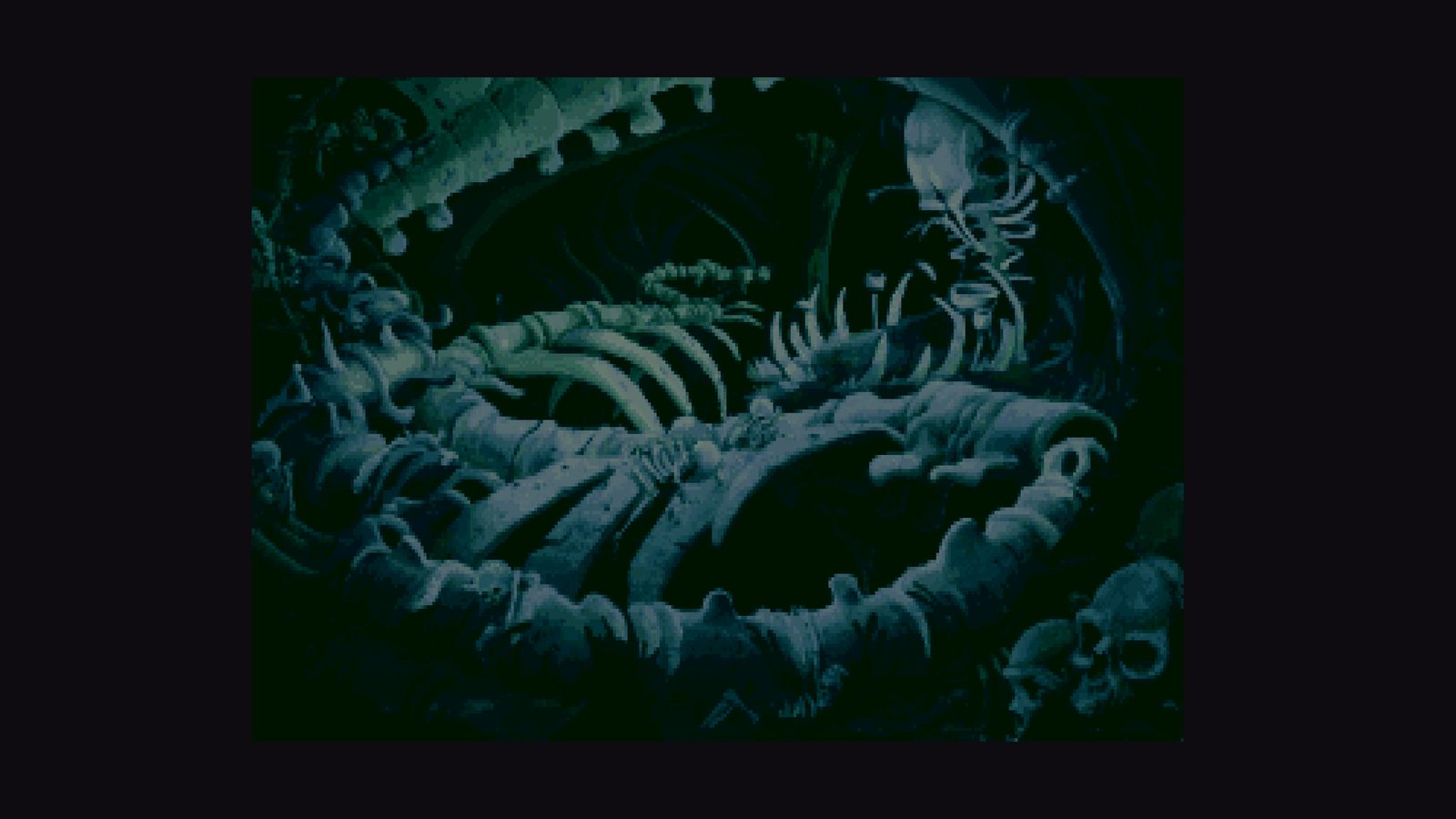
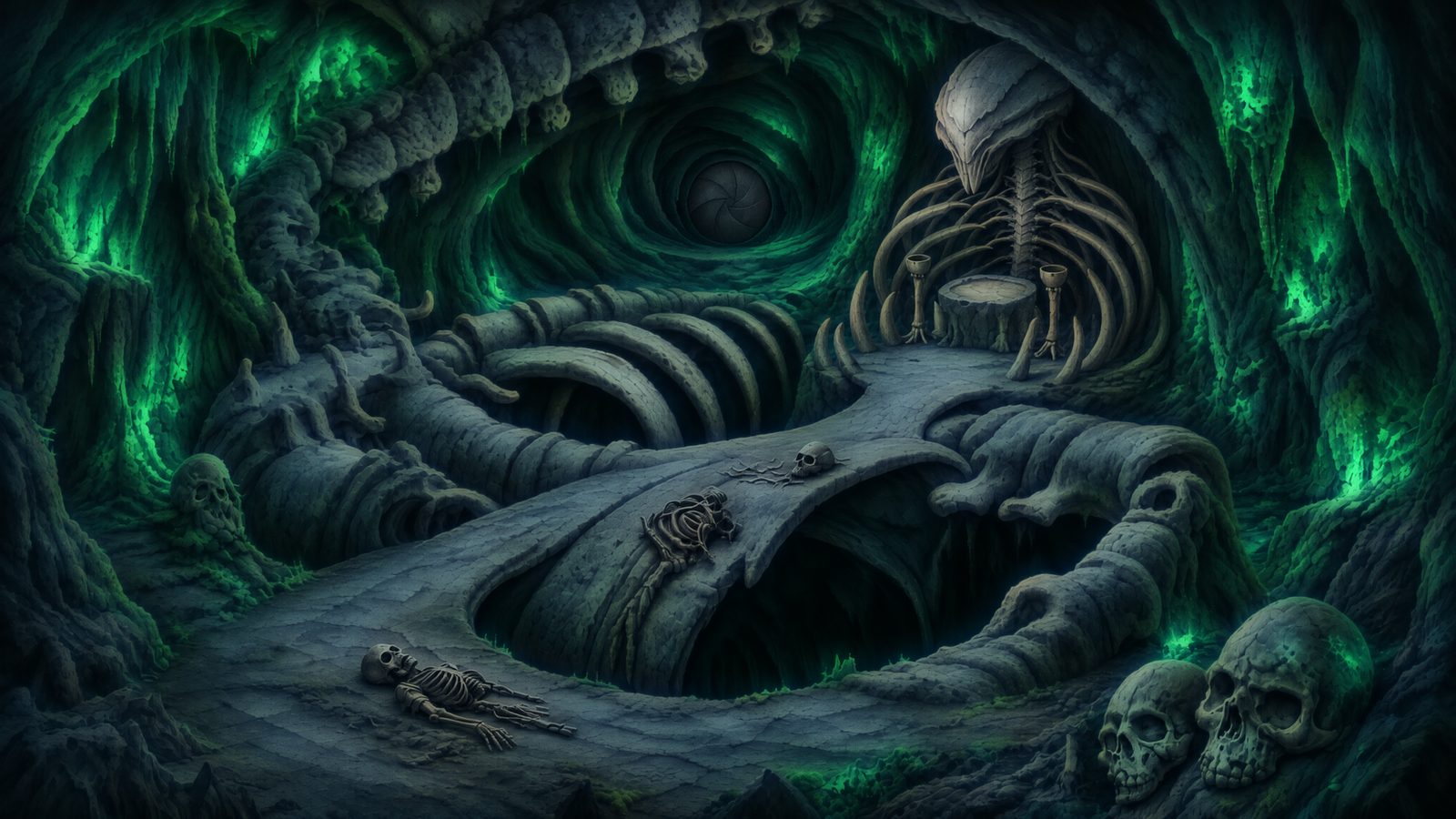 Sierra, 1994Remake
The first chapter
The game is being built in pieces, and nothing else gets built until this one is complete and working. The Intro runs through four rooms, each playable in 2D and in the new 3D view.
Where the hero wakes. Repainted from a new design, with an iris door, a bone cage that erupts around a thief, and a backflip escape from real motion capture.
Built, in playtest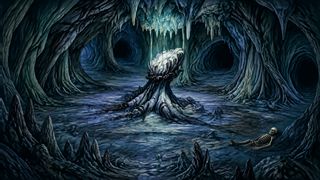
The first fight. Full combat with arcade and strategy modes, a combat tutorial, and HD Badders that swoop, bite and burst.
Built & confirmed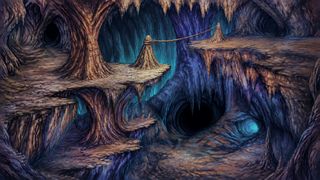
The rope, the tentacle and the first Levitate. This is the 3D proving ground: if it works in 710, it works everywhere.
Built & confirmed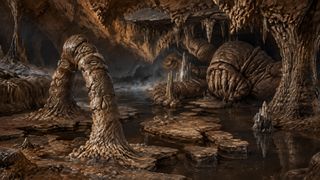
A conversation with animated portraits, remastered voices and day and night versions of the cave mouth.
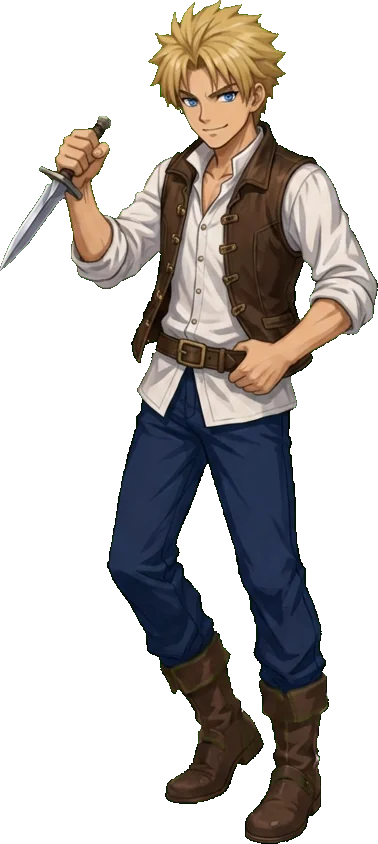
Built & confirmedThe heroThe hero is the heart of the whole project. If he can't look and move like the character-select art, nothing else matters, so he gets more care than anything else in the game.
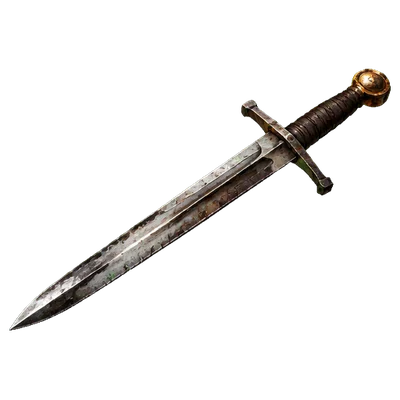
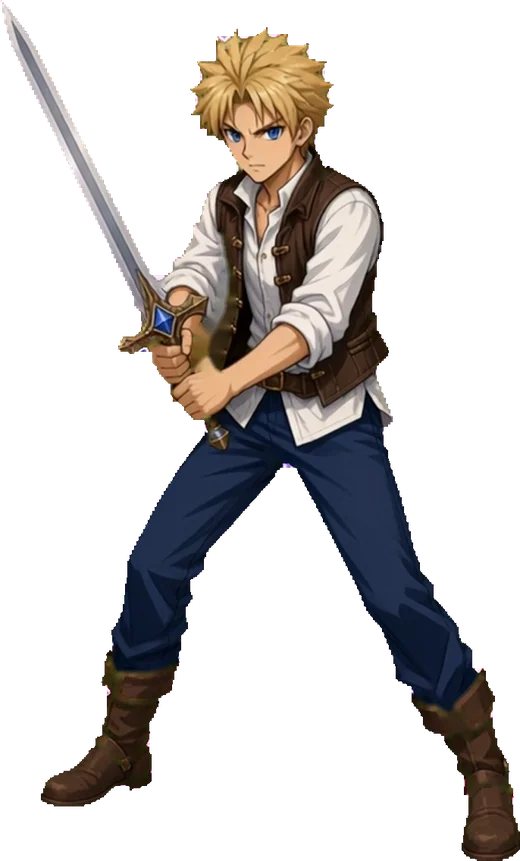 Fighter
 Magic User
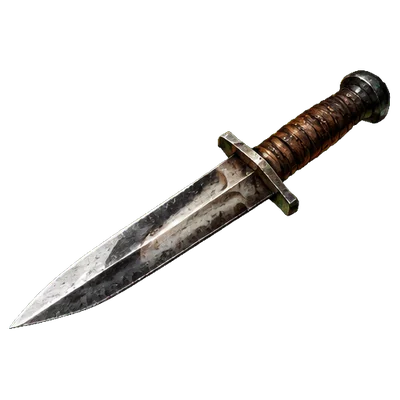
 Thief
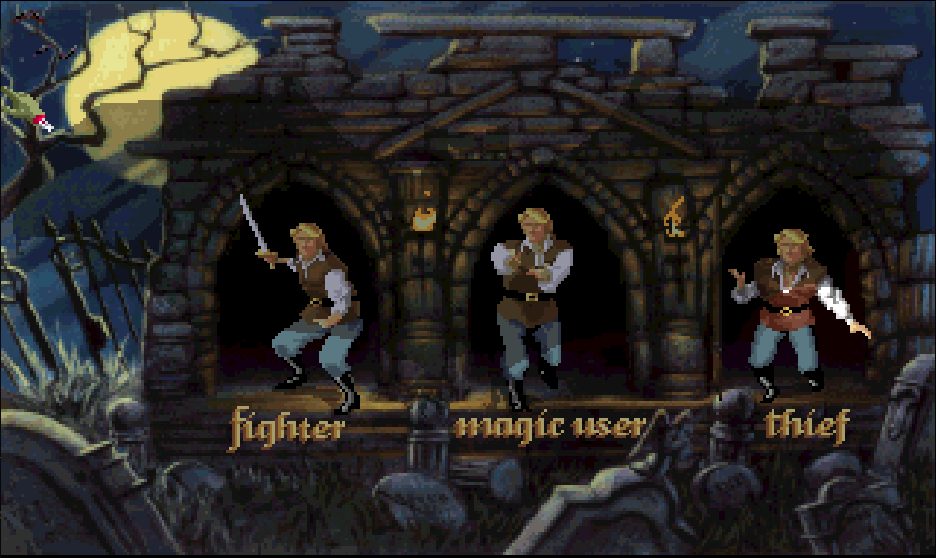
Sierra's character select was the very first screen rebuilt, and where the new look for the hero was born.

The playable hero is a 3D model built from A-pose reference art, kept cartoon-styled to match the character select. Every move comes from real motion capture, never hand-keyed poses.
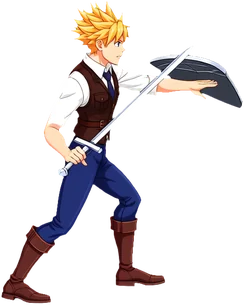
Combat frames are rendered from the model, with the shield strapped to his arm where it belongs. The Badders come from a bat model with a hand-animated wing flap.
Voices & musicThe Narrator. Wherever the original CD narration cleans up well, it stays, restored with AI audio tools. Where a recording is too noisy or unclear to save, the line is re-voiced with an AI clone of the original narrator, reading the original script with the untouched recording guiding its pitch, excitement and timing. New lines the original never had, like the journal entries, use the same cloned voice.
The cast. Original performances are cleaned and restored with AI audio tools rather than replaced. A line too damaged to save may be recreated with a voice clone of the same actor. Katrina's lines came back clearer than they ever sounded on CD. Press play on her portrait to hear her first meeting with the hero, exactly as it plays in the remake.
Talking portraits. Dialogue portraits are fully animated, breathing, blinking and mouthing every word, rather than a still picture with only a moving jaw.
The music. The original Quest for Glory IV score in some form, always: the title theme as it was, other tracks remastered or rebuilt from the originals. It is all made locally and never uploaded to an online music service.
New in this editionThe icon bar's question mark became a quill. It opens a single book with tabs set as coins, so pages can be added or rearranged just by editing data.
This is the remake's own journal art. Click a coin to turn the page.
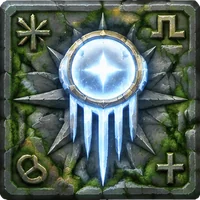
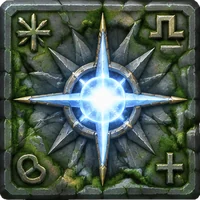
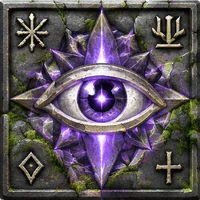
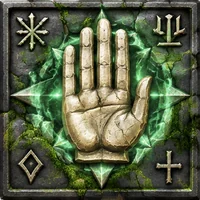
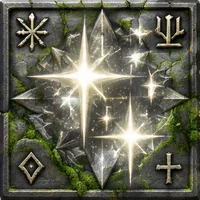
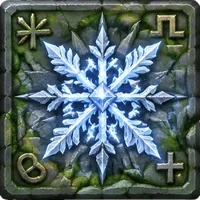
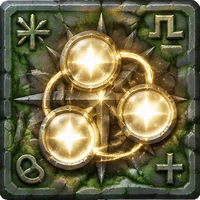
A new HD spell window with mana and stamina, a targeting cursor, and skill levels shown right on the spell list. Levitate, Flame Dart, Force Bolt, Detect, Calm, Dazzle and Zap all work.
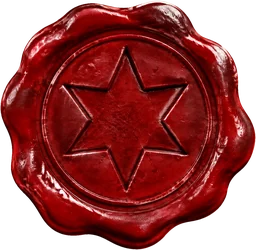
Puzzle points open the Achievements window, on parchment with a wax seal. Each line links back to the journal entry where it happened.
Any skill you practise has a chance to improve, and the game tells you when it does. Run is a toggle, and the time dial drives night and dawn.
Where it matters, the new sits beside the old as a choice in the options, so you can play it the way you remember it, or the way it looks and sounds today.
Pick the look for each screen: the original 1994 menus, newly painted versions, or the modern iron style.
Hear the untouched 1994 CD recordings exactly as they shipped, or the restored set: cleaned-up originals, with an AI clone only where a line couldn’t be saved.
The workshop$ bash tools/test.sh 103 scenarios 770 wake up, search the corpses, light the torch ok 720 beat the Badders, take the warrior's gear ok 720 thief slips away while the flock is out ok 710 walk the tightrope across and back ok 710 levitate, run out of mana in the air ok 790 stepping stones, the Dark One Sign ok ... ALL GOOD
Where it standsFrom the ChronicleThe Adventurers' GuildFeedback, memories of the original, questions about the remake: write them in the logbook. Sign in with a GitHub account to post. Every entry is also kept on the Guild's GitHub Discussions board.
The Guild hall opens soon.